

Apartment Moving in Pittsburgh - Building Rules, Elevators, and Parking Permits
Apartment moving in Pittsburgh comes with a set of rules and logistics that most suburban home moves do not. Between elevator reservations, certificate of insurance requirements, restricted move-in hours, and narrow streets with limited parking, missing a single step can delay your entire day - or cost you money you did not plan to spend.
Whether you are moving into a high-rise Downtown, a walkup in Lawrenceville, or a garden-style complex in Shadyside, the process starts well before the truck arrives. Understanding your building's requirements and Pittsburgh's street-level challenges ahead of time is the difference between a smooth move and a stressful one. This guide covers everything you need to handle before, during, and after an apartment move in Pittsburgh.
Reserve the Elevator Before Anything Else
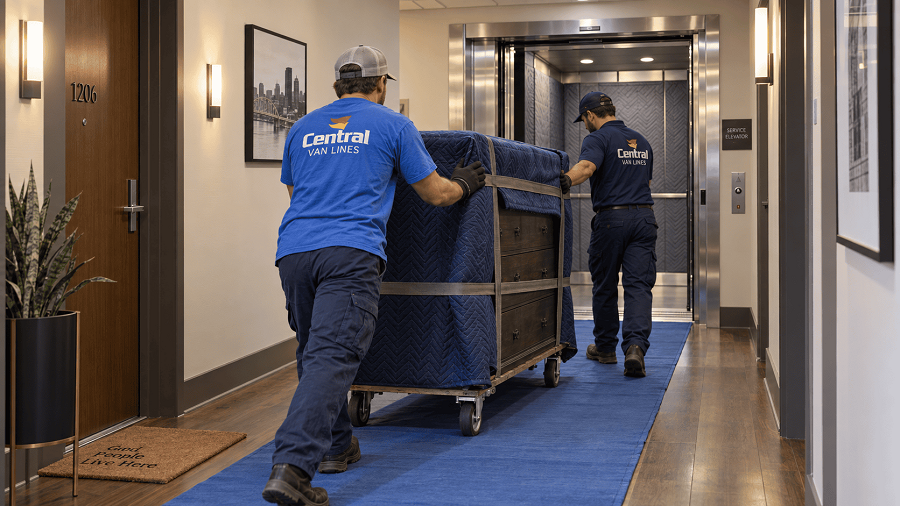
Most mid-rise and high-rise apartment buildings in Pittsburgh require residents to reserve the service elevator in advance for moving. This is the single most overlooked step in apartment moving - and one of the most disruptive when it is missed.
Service elevators are shared between tenants, contractors, and delivery teams. Without a reservation, your movers may not be allowed to use the elevator at all, which means either hauling everything up the stairs or rescheduling.
Standard lead time for an elevator reservation is at least two weeks. Buildings in high-demand areas like Downtown, Oakland, and the Strip District may require three to four weeks during peak summer months. Contact your building manager or leasing office the same week you confirm your move date.
When you make the reservation, confirm the length of your window. A one-bedroom apartment typically needs a two-to-three-hour block. A two-bedroom or larger may need four to five hours. Make sure the window accounts for both loading and unloading - running over your reserved time can bump the next person's reservation and create problems with building management.
Certificate of Insurance Requirements
Many Pittsburgh apartment buildings require a Certificate of Insurance (COI) from your moving company before granting access to common areas, elevators, or loading docks. The COI names the building or management company as an additionally insured party and proves the mover carries liability coverage.
This is not optional. If your mover shows up without the COI, building management can turn them away at the door.
Ask your building for the exact COI requirements as early as possible - who needs to be listed, the minimum coverage amounts, and where to send the certificate. Then pass those details to your moving company immediately. Professional movers provide COIs routinely, but they need the building's specific requirements to issue the document correctly.
Central Van Lines provides certificates of insurance as part of every
apartment move in Pittsburgh. The earlier the building's requirements are shared, the smoother the handoff.
Building Rules That Affect Your Move
Every building has its own set of move-in and move-out policies. These are not suggestions - violating them can result in fines, withheld deposits, or your movers being denied entry.
Common building rules in Pittsburgh apartments include restricted moving hours, which typically fall between 8:00 AM and 5:00 PM on weekdays. Some buildings allow Saturday moves but prohibit Sunday or holiday moves. After-hours moves may be available at an additional fee.
Floor protection is often required. Many buildings mandate that movers lay down floor runners or masonite sheets in hallways, elevators, and common areas to prevent scuffs and scratches. Professional movers carry these, but confirm with your building whether a specific type is required.
Moving through the lobby may be restricted. Some buildings require that all moving activity go through a service entrance or loading dock rather than the main lobby. This is common in Downtown and North Shore buildings.
Advance notice to neighbors is sometimes required, particularly in smaller buildings where the elevator is shared with resident traffic. Building management may handle this, but check.
Furniture that does not fit through standard doorways needs to be disassembled before the move. Attempting to force oversized pieces through hallways or stairwells is the fastest way to cause damage - to your furniture and to the building. Experienced apartment movers disassemble and reassemble as part of the service.
Parking and Truck Access in Pittsburgh Neighborhoods
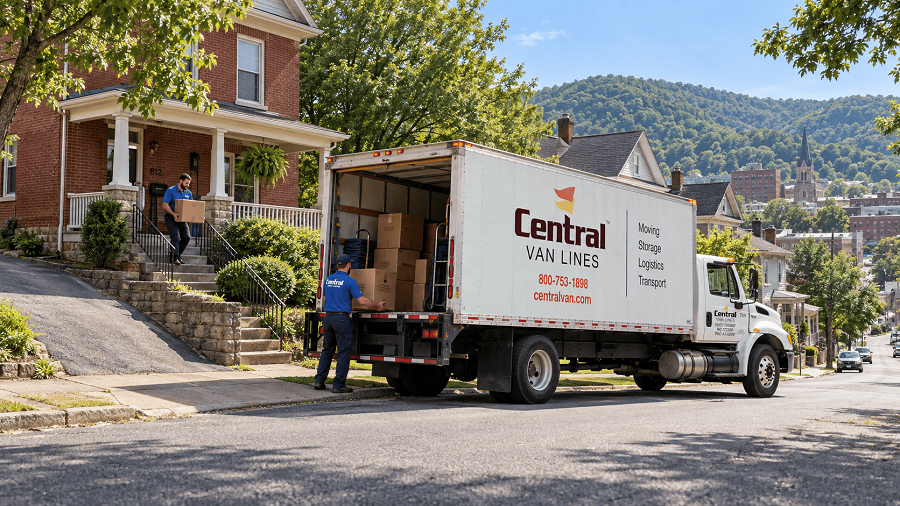
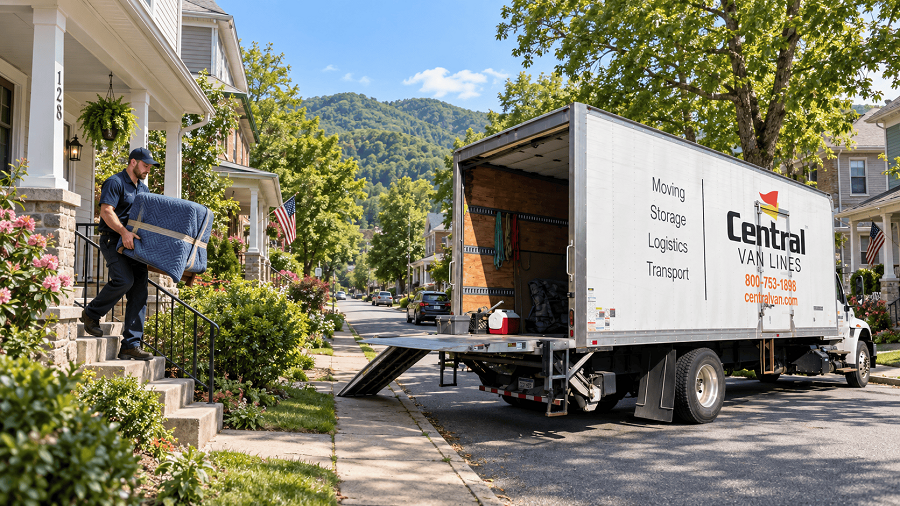
Parking a moving truck on a Pittsburgh street is rarely straightforward. The city's narrow roads, one-way streets, steep hills, and dense on-street parking create access challenges that vary from neighborhood to neighborhood.
In most cases, you will need to reserve a temporary no-parking zone on your street. The City of Pittsburgh issues temporary parking permits through the Department of Mobility and Infrastructure. Applications need to be submitted at least three business days in advance, and the city places no-parking signs along the reserved space.
Without this permit, the moving truck may have nowhere to park within a reasonable distance of your apartment - and every extra foot between the truck and your door adds time and cost.
Here is what to expect in some of Pittsburgh's most common apartment neighborhoods:
Downtown and the Strip District - loading docks are the norm for high-rises, but they often require reservations. Street parking for trucks is extremely limited and metered. Plan for a loading dock or secure a temporary no-parking zone early.
Oakland - heavy student turnover means apartment moves are concentrated around semester transitions. Elevator and moving reservations fill fast in August and December. Streets like Forbes and Fifth are congested, and side streets are narrow.
Shadyside and Squirrel Hill - tree-lined residential streets with cars parked bumper to bumper. Temporary parking permits are almost always necessary. Some buildings have rear alley access that is worth asking about.
Lawrenceville and Bloomfield - older rowhouse-style apartments with tight stairwells and narrow entries. Street parking is competitive, and double-parking blocks traffic on Butler Street and Liberty Avenue. Plan for a carry distance.
South Side - East Carson Street and the surrounding blocks are tight. Moving day during bar hours is impractical. Schedule for early morning.
Mount Washington and the South Side Slopes - steep inclines and limited truck access. Shuttle trucks may be needed if a full-size moving truck cannot safely reach your building.
How to Prepare Your Apartment for Movers
The work you do before the movers arrive has a direct impact on how quickly and safely the move goes.
Start by decluttering. Apartment moves are priced by the hour for local moves, so every box and piece of furniture that goes on the truck adds to the total. If you have not used something in a year, it probably is not worth paying to move it.
Disassemble what you can. Bed frames, desks, and shelving units move faster and safer when broken down. Keep all hardware in labeled bags taped to the corresponding piece.
Clear a path. Hallways, doorways, and stairwells should be completely clear before the crew arrives. Shoes, rugs, and clutter along the route slow things down and increase the risk of someone tripping.
Protect your floors. Even if the building does not require it, putting down floor protection in your unit is smart - especially on hardwood. Your security deposit is on the line.
Label every box with the room it belongs to in the new apartment and a brief description of the contents. This eliminates guesswork for the movers and speeds up unloading.
Move-Out Checklist for Pittsburgh Apartments
Leaving an apartment involves more than clearing out your belongings. Missing one of these steps can cost you part or all of your security deposit.
Return all keys, fobs, and parking passes. Missing access items commonly result in replacement charges.
Request a joint walkthrough with your landlord before you leave. Pennsylvania law allows tenants to request a move-out inspection with the landlord present. This gives you the chance to address any concerns before deductions are made.
Document the condition of the apartment with dated photos. Capture every room, the inside of appliances, and any existing damage you want on record.
Cancel or transfer utilities. Confirm the shutoff date with each provider and make sure it does not fall before your actual move-out day.
Forward your mail with USPS. You can set this up online and schedule it to start on your move-out date.
FAQs - Apartment Moving in Pittsburgh
Do I need a parking permit for a moving truck in Pittsburgh?
In most neighborhoods, yes. The City of Pittsburgh issues temporary no-parking permits through the Department of Mobility and Infrastructure. Submit your application at least three business days before your move. Without a reserved space, your truck may not have a legal or practical place to park.
How far in advance should I reserve the building elevator?
At least two weeks. During peak months - May through September - some Pittsburgh buildings require three to four weeks of notice. Contact your leasing office or building manager as soon as you confirm your move date.
What is a Certificate of Insurance and will my movers provide one?
A Certificate of Insurance is a document from the moving company's insurer that names the building as an additionally insured party. Most high-rise and mid-rise buildings in Pittsburgh require one before granting elevator or loading dock access. Professional local movers provide COIs routinely - just pass along your building's requirements.
Can movers handle narrow stairwells and tight doorways?
Experienced apartment movers carry floor runners, furniture pads, and disassembly tools specifically for tight spaces. Pittsburgh is full of older buildings with narrow stairwells and non-standard doorways. Make sure your moving company knows the building layout before moving day - ideally during the estimate.
How long does a typical apartment move take?
A one-bedroom apartment in Pittsburgh typically takes two to three hours. A two-bedroom takes three to five hours depending on the amount of furniture, the floor level, elevator access, and how far the truck is from the door. Stair carries and long hallway distances add time.
Book Your Pittsburgh Apartment Move
Moving into or out of a Pittsburgh apartment is manageable when you handle the building logistics early and hire a crew that knows the city. Elevator reservations, COI paperwork, and parking permits are not optional steps - they are the foundation of a smooth moving day.
Central Van Lines is a family-owned
Pittsburgh moving company with over 25 years of experience in the city's apartments, high-rises, and walkups. Request a free quote to get started.