

Final Mile Delivery: What to Require
For anything large, heavy or valuable, the last leg of the journey is where most of the risk lives. The freight can cross the country without incident and then get damaged in a doorway, left on a porch in the rain, or dumped in a garage because the carrier's job ended at the curb.
Final mile delivery is the discipline of getting goods the last stretch and into the space they belong, correctly. For a business shipping to customers or to its own locations, the carrier you choose for that last leg determines what your customer actually experiences. Here is what to require.
What "final mile" actually covers
The term gets used loosely, so pin it down. Final mile delivery covers the movement of goods from a local distribution point to the final destination, and increasingly it means more than dropping a box at a door.
The service levels differ sharply, and the price differences reflect real differences in what happens:
- Threshold delivery. Inside the door, first dry space. Better than curbside, but the customer moves it from there.
- Room of choice. Carried to where the item will actually be used, up stairs if needed.
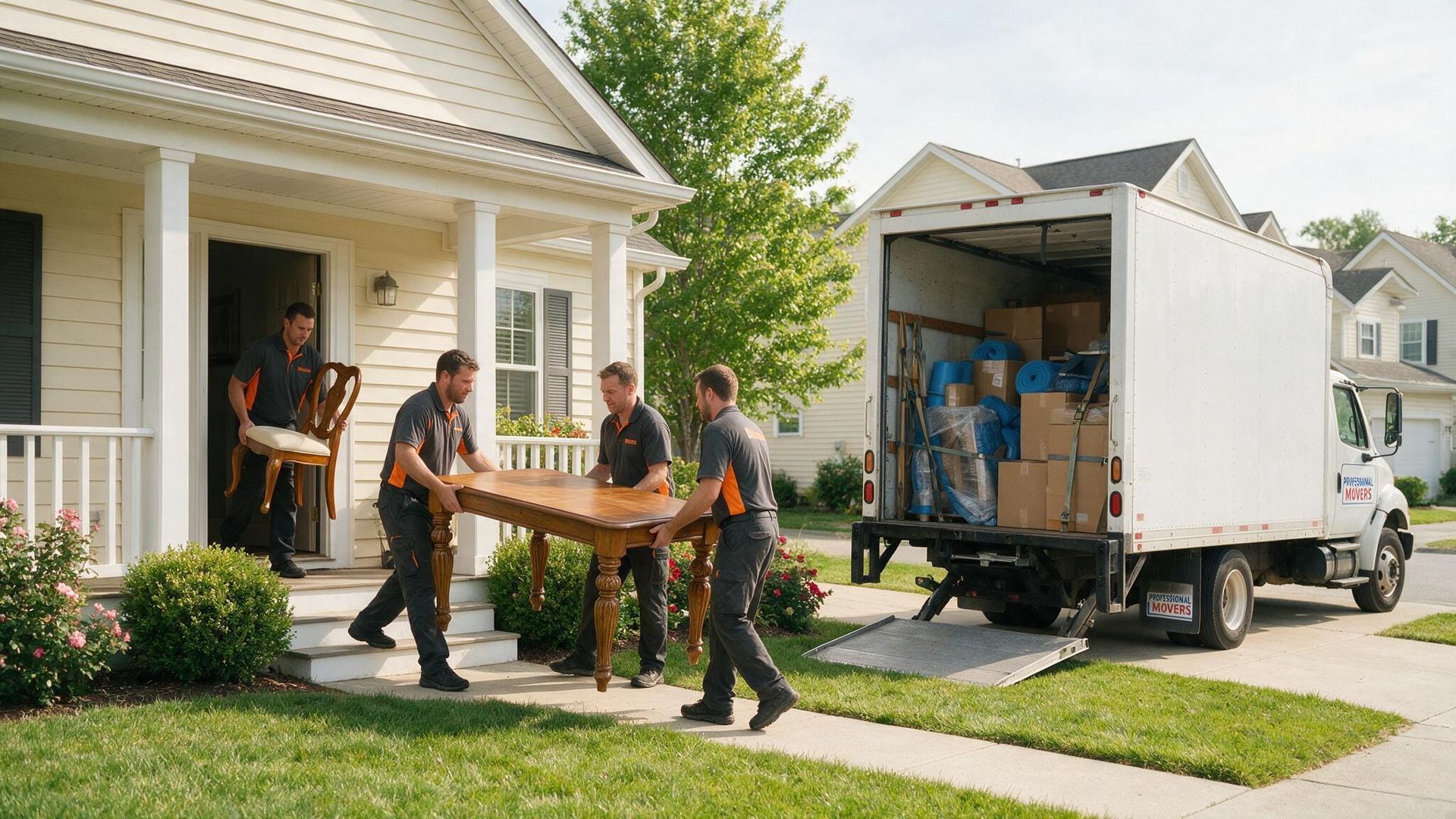
- White glove. Room of choice plus unpacking, assembly, placement, and removal of packaging and debris. For furniture, appliances and high-value goods this is what most customers picture when they imagine a delivery going well.
Decide which level your product needs before you compare carriers, because a threshold quote and a white glove quote are not comparable numbers.
The requirements that separate carriers
Price is easy to compare and tells you the least. These are the things that determine whether the delivery goes well.
Scheduled delivery windows, confirmed with the recipient. A carrier that gives an all-day window wastes your customer's day and generates the complaint. Ask what window the carrier commits to and how it confirms ahead with the recipient.
Appointment and communication. The recipient should know when the delivery is coming and be able to reach someone. For a business, a delivery that fails because nobody was reachable is a redelivery cost and an unhappy customer in one.
Two-person crews where the product needs them. A single driver cannot safely place a wardrobe or an appliance in a second-floor room. If your product requires two people, confirm the carrier staffs two, rather than discovering on the day that it did not.
Assembly and installation capability. If the product needs assembling or installing, the carrier either does it or it does not. A carrier that delivers but cannot install turns one visit into two.
Debris and packaging removal. For white glove, the packaging leaving with the crew is part of the service. Ask explicitly, because "delivery" and "delivery plus haul-away" are different jobs.
Damage handling and claims. Ask what the process is when something arrives damaged, how fast it resolves, and who the customer talks to. This is the question that matters most and gets asked least.
Why the last mile is where accountability disappears
National networks are efficient over distance and weak at the end, because the final leg is usually subcontracted. The company that took your order is not the company standing in your customer's living room, and when the delivery goes wrong there is a gap between the two where accountability falls.
A regional carrier running its own crews on the final leg does not have that gap. The same operation that received the freight delivers it, which is why final mile delivery handled in-house tends to produce fewer failures and faster resolution than the same service subcontracted. If your product is installed or placed rather than dropped, that difference outweighs a small gap in the rate.
This is the same logic that applies to warehousing and distribution: the fewer times freight changes hands, and the fewer companies involved, the fewer points at which something goes wrong.
The retail and FF&E case
For store rollouts, hotel refurbishments and office fit-outs, final mile is not delivery to a person, it is delivery to a project on a schedule.
That adds requirements: staging goods by installation date rather than delivering everything at once, coordinating with the site's readiness, installing fixtures, and removing the old equipment on the same visit. A carrier that only delivers cannot do this. A carrier set up for retail delivery and installation or FF&E rollouts treats the delivery as one step in a sequenced project, which is what a rollout actually needs.
What to ask before you sign
Five questions will tell you whether a carrier can do what you need.
- What service level is this quote for, threshold, room of choice, or white glove?
- What delivery window do you commit to, and how do you confirm with the recipient?
- Do you run your own crews on the final leg, or subcontract it?
- Can you assemble, install and remove packaging, if the product needs it?
- What is your damage claims process, and how fast does it resolve?
A carrier that answers those cleanly has thought about the end of the journey. A carrier that only wants to talk about the rate has told you where its attention is.