


When Storage Makes Sense During a Move
Most people think about storage only when the dates do not line up. The sale closes before the purchase, the new place is not ready, and suddenly there is a week or a month with nowhere to put a household. That is the obvious case, and it is only one of several.
Storage during a move is a planning tool, not just a fallback. Used deliberately, it takes pressure off the parts of a move that go wrong under time pressure. Here is when it earns its place, and what to look for.
The gap between two dates
This is the common one. Closing dates rarely align, leases rarely hand over cleanly, and the gap between leaving one place and entering the next can be days or months.
Storage-in-transit is built for exactly this. Your belongings are loaded, stored by the moving company, and delivered when the new place is ready, without a second full move in between. For an interstate move it also means the shipment can leave on schedule rather than waiting on a destination that is not ready, which keeps the rest of the plan intact. If you are moving long distance from Pittsburgh and the far end is uncertain, this is usually cheaper and less risky than delaying the whole move.
Staging a move you cannot do in one day
Large moves, and moves with restricted access at either end, often cannot happen in a single day.
A downtown building may only grant a four-hour freight elevator window. A closing may fund the purchase in the afternoon when the crew needs the morning. Storage lets you decouple the load from the delivery: pack and load on your schedule, hold for a day or a week, deliver into the new space when access allows. For a commercial move in Pittsburgh this is routine, and the same logic applies to a complicated household move.
Downsizing, decluttering and selling
Two situations where holding some items back helps rather than hinders.
- Selling a home. Staging works better with less in the house. Moving the excess into storage before the listing photos, rather than after the sale, means the house shows better and the eventual move is smaller.
- Downsizing. When the new place is smaller, not everything fits and not every decision has to be made immediately. Short-term storage buys time to sort, sell and donate without the pressure of a moving truck idling outside. This is particularly useful in a senior move, where sorting a long-occupied home is emotional work that should not be rushed into a single day.
Renovating before you fully move in
If the new place needs work, moving everything in and then working around it is the expensive way to do it.
Holding the household, or the rooms being worked on, in storage until the work is done protects the belongings from dust and damage and gives the trades a clear space. It is cheaper than moving furniture twice inside the same house, and cleaner than covering everything in sheeting for a month.
Short-term versus long-term, and the questions that matter
Not all storage is the same, and the differences matter more than the monthly rate.
Climate control. For anything sensitive to heat, cold or humidity over time, this is not optional. Wood furniture, electronics, artwork, documents, leather and instruments all degrade in an uncontrolled unit through a Pennsylvania summer or winter. Ask whether the facility is genuinely climate-controlled or merely indoors.
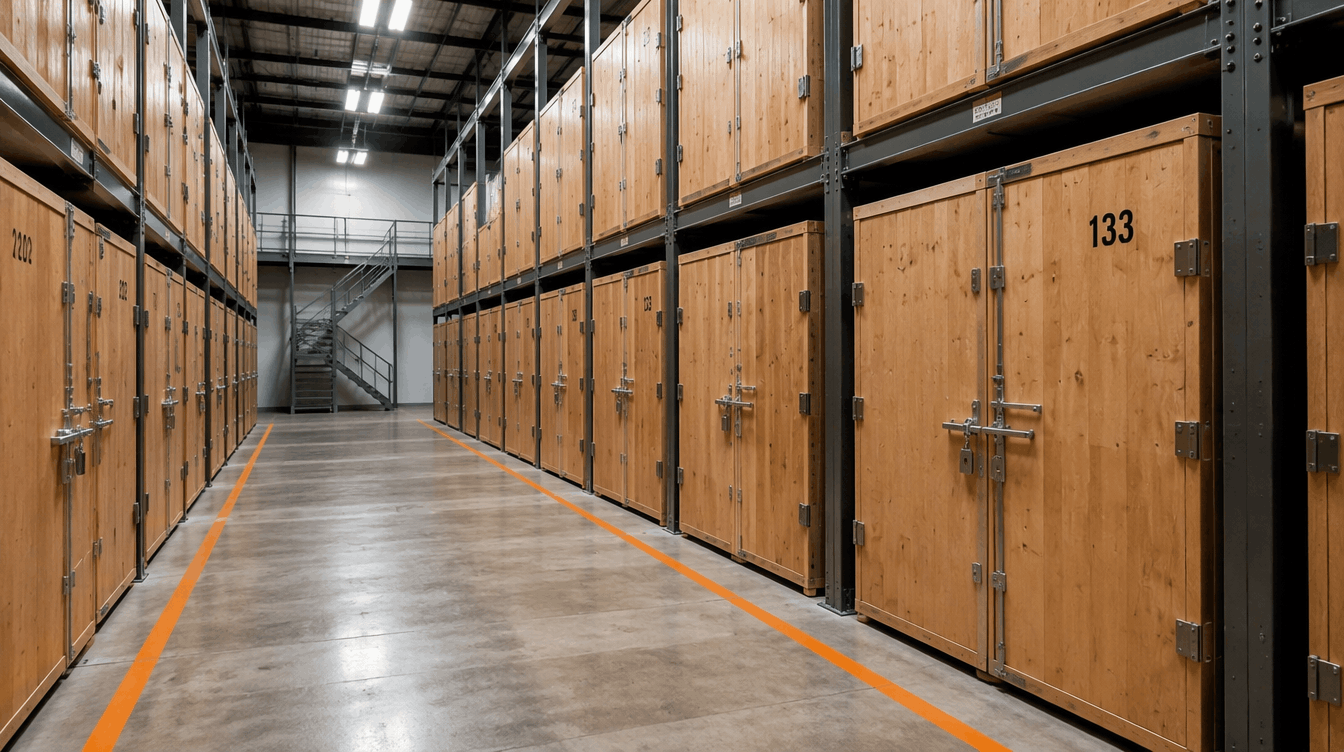
Containerized versus self-storage. With containerized storage, your goods are loaded into sealed wooden vaults, inventoried, and handled once. With self-storage you rent an empty room and do the handling yourself, which means loading, driving, unloading and doing it all again in reverse. For a move, containerized storage through the moving company usually means less handling and less damage, because the crew that packed the vault is the crew that delivers it.
Inventory and access. Ask how the inventory is tracked and how you get to your belongings if you need something. A documented inventory matters more the longer the storage runs.
Insurance. Confirm what valuation coverage applies while goods are in storage, which is a separate question from coverage in transit.
When storage does not make sense
It is worth being honest about the other side. If your dates line up, the new place is ready, and the move can be done in a day, storage adds cost and an extra handling step for no benefit. Direct is better when direct is possible.
The case for storage is specific: a gap between dates, restricted access, a downsizing or sorting decision that needs time, or a renovation. If none of those apply, skip it.
Plan it into the move, not around it
The mistake is treating storage as an emergency measure decided in the final week, when the options are worst and the price is highest. Decided early, it becomes part of the plan: the shipment leaves on time, the belongings are handled once, and the delivery happens when the new space is genuinely ready.
If there is any uncertainty about the destination date, raise storage at the survey. A mover who handles storage in Pittsburgh as part of the move can build it into a single quote rather than bolting it on later.