

Warehousing vs 3PL: Which Model Fits Your Inventory
If your business holds inventory in Pennsylvania, West Virginia or Ohio, you have two broad options for storing and shipping it. You can use a regional warehouse operator, or you can hand the whole function to a national third-party logistics provider. The rate cards look comparable. The models are not.
The decision usually gets made on price per pallet, which is the wrong basis. What actually determines the right answer is what your freight needs to happen to it after it leaves the building.
What each model actually is
Regional warehousing means a facility within reach of your customers, usually operated by a company that also handles transport. You get storage, receiving, inventory management, and delivery on the operator's own trucks. The relationship is direct and the geography is limited.
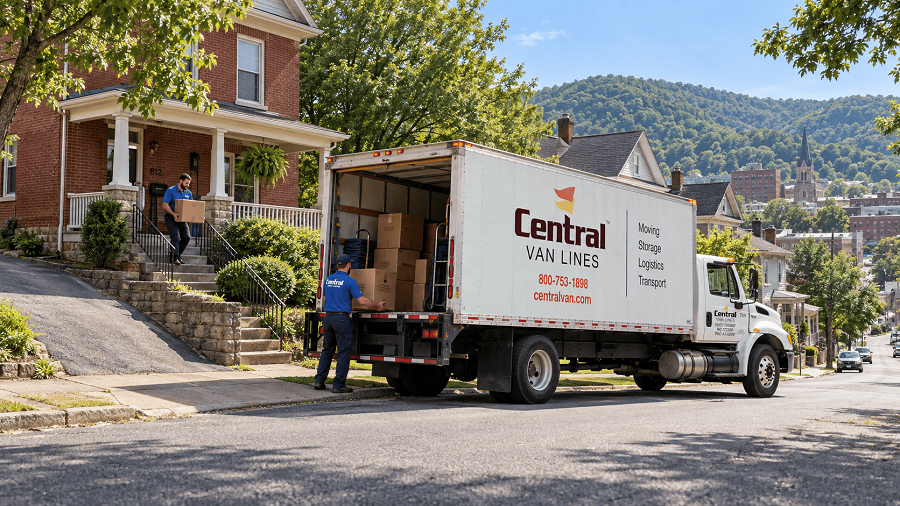
A national 3PL means a network of facilities, usually with better technology and broader reach. You get multi-node inventory positioning, order management integration, and carrier rates negotiated at scale. The relationship runs through account management and the transport is typically subcontracted.
Both are legitimate. They suit different freight.
The question that decides it
Not price. Whether your freight needs handling or just shipping.
Freight that ships: cartons going to consumers or retail distribution centres. Standard sizes, no assembly, no scheduling with the recipient, no access constraints. National networks are built for exactly this and will beat a regional operator on cost and reach.
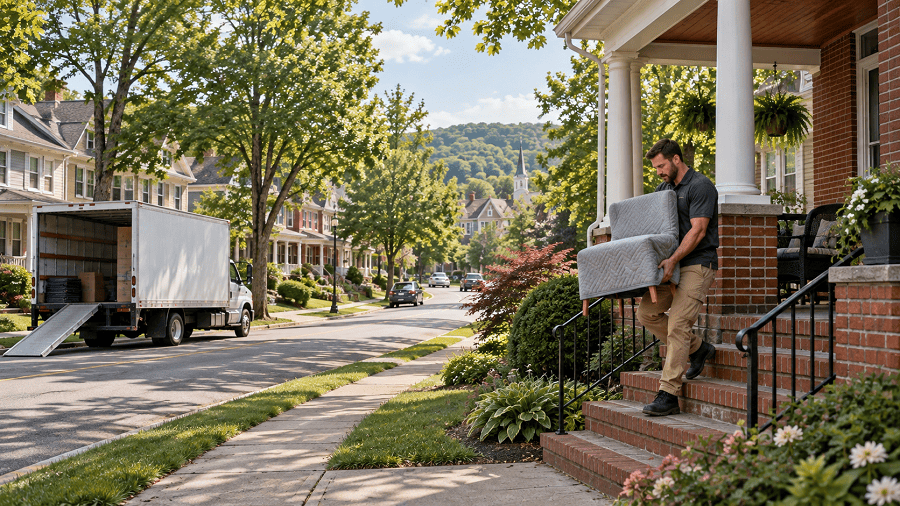
Freight that needs handling: furniture, fixtures, equipment, anything requiring assembly, anything delivered into a building rather than to a dock, anything scheduled around a construction or installation timeline. Here a regional operator with its own delivery capability holds a structural advantage. A national network subcontracts the final mile, and subcontracted white glove delivery is where accountability tends to disappear.
If your product is installed rather than dropped, that difference matters more than any line on a rate card.
The second question: where does your volume land?
Geographic concentration is the other deciding factor.
A warehouse positioned in Western Pennsylvania or the Ohio Valley can reach most of Pennsylvania, West Virginia and eastern Ohio within a day's drive. If most of your volume lands inside that footprint, one well-placed regional facility may serve you better than a national network's nearest node, which might sit in Columbus or Harrisburg and add a day to a large share of your deliveries.
If your volume is genuinely national, the multi-node math wins and it is not close.
Compared
Regional warehousingNational 3PLReachRegional, day's driveNational, multi-nodeFinal mileOwn trucks, one accountable partyUsually subcontractedExceptions and custom handlingConversations, not change requestsQuoted as projects or declinedTechnologyOften thinner, sometimes manual reportingReal-time visibility, EDI, integrationsCarrier ratesStandardNegotiated at scaleSurge capacityFiniteFlexes readilyCommunicationDirect, with the people handling your stockLayered account managementSite riskSingle facilityMultiple facilities
Where regional operators are genuinely better
Exceptions are easy. Kitting, repacking, custom labelling, staging by installation date, holding freight for a job site that is not ready. These are conversations rather than change requests, because the person you are talking to can walk out and look at your pallets.
Handling services come bundled. White glove delivery and installation, assembly, fixture and equipment staging for store and hotel rollouts, and removal of old equipment on the same trip. That combination is difficult to assemble from separate vendors.
Accountability is single-party. One company receives, stores, picks and delivers. When something goes wrong there is no argument about whose failure it was.
Where they are genuinely worse
Fewer nodes. National distribution costs more per shipment.
Thinner technology. Some regional operators still run systems that will not integrate with your order management platform without manual work. Ask directly what inventory visibility you get and how, because "we will email you a report" is a real answer in this segment.
Finite surge capacity. If your volume triples for a season, that is a conversation about whether the space exists.
Single-site risk. A weather event or facility problem takes the whole operation offline.
Compare landed cost, not storage rates
Rate cards are not comparable on their face and both sides know it.
National providers typically price storage per pallet per month, receiving per unit or per hour, and pick-and-pack per order or per line, with accessorials for anything unusual. The headline rates look competitive. The accessorials are where the real cost lives, and they are hard to model until you have run a few months of actual activity.
Regional operators often quote more simply, sometimes with handling bundled. Easier to forecast, harder to benchmark.
The comparison that matters is landed cost per delivered order, including final mile, exceptions, and the internal time your team spends managing the relationship. That last item gets underestimated consistently. A cheaper rate that requires someone to chase inventory discrepancies every week is not cheaper.
Price failure too. What does a damaged delivery cost in replacement, redelivery and customer relationship? If your product is high value or installed on a schedule, damage and delay costs dominate the storage rate, and the provider with tighter handling control is cheaper even at a higher rate.
The hybrid nobody quotes
Plenty of operations end up splitting: a national provider for standard parcel-shippable inventory, regional warehousing and distribution for the freight that needs handling, staging or installed delivery.
It adds coordination overhead and neither provider will suggest it. But for businesses with genuinely mixed inventory it usually costs less than forcing everything through whichever model fits half the catalogue. The requirement is that the handling-intensive portion stays with one accountable party.
Four questions to answer first
- What share of your volume lands within a day's drive of Western Pennsylvania or the Ohio Valley?
- Does your product need installing, assembling or scheduling with the recipient, or just delivering to a dock?
- What does a damaged or late delivery actually cost you?
- What inventory visibility do you genuinely need, as opposed to what a dashboard demo makes you want?
Answer those honestly and the choice usually makes itself. Answer them from a rate card and you will end up optimising the smallest line in your logistics budget.