

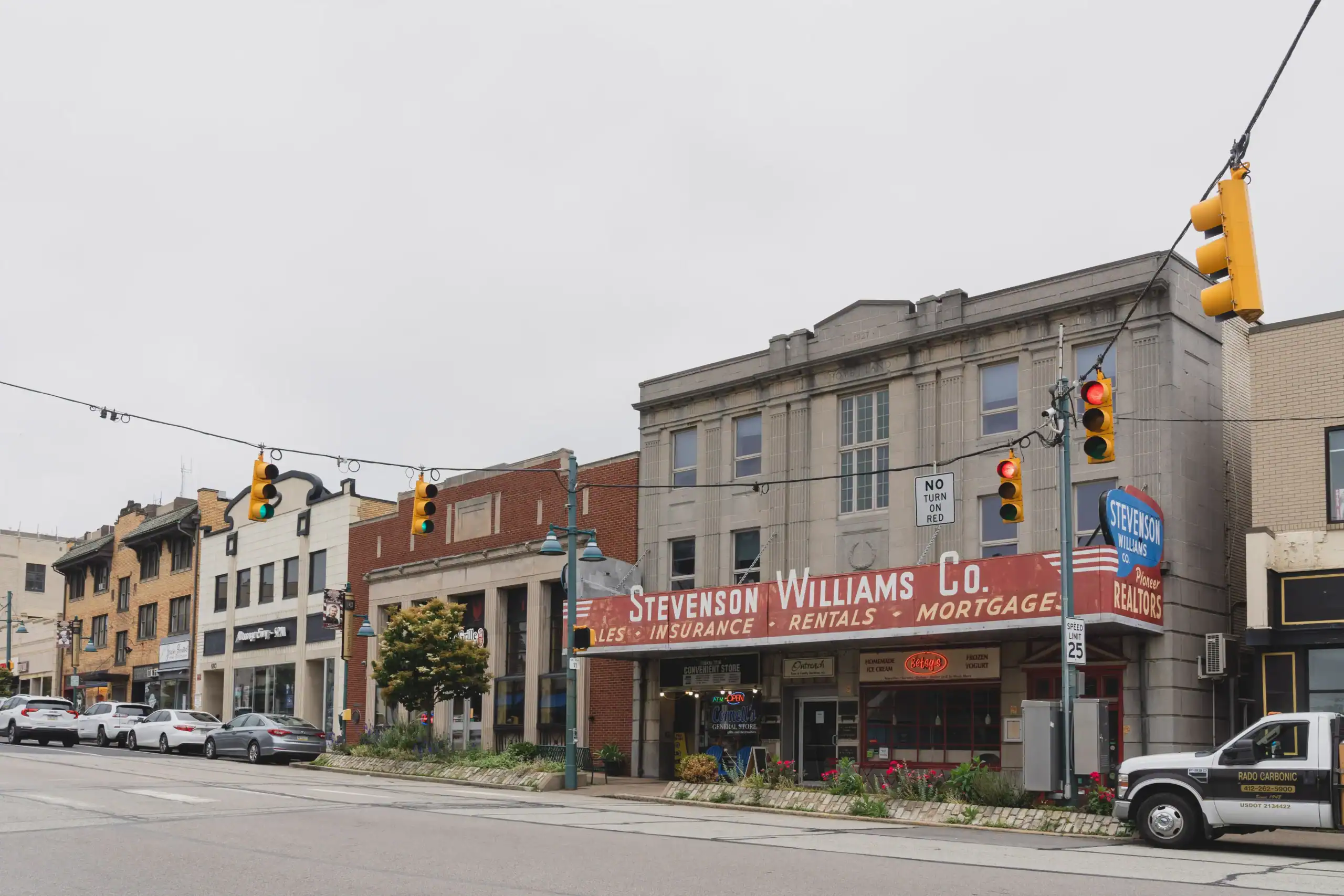
The Best Suburbs of Pittsburgh for Families and Commuters

Pittsburgh’s suburbs spread out in every direction, across rivers, ridges, and valleys. Each area has its own character, and the right choice depends on where you work, how you want to commute, and what kind of neighborhood fits your family.
This guide covers some of the best places to live in the Pittsburgh area for families and commuters, grouped by direction from the city. It also includes practical tips for moving to the suburbs, since hills, bridges, and winter weather shape both daily life and moving day.
How to Choose a Pittsburgh Suburb
Before comparing towns, narrow your priorities:
- Commute route. Pittsburgh traffic funnels through tunnels and bridges. A suburb 15 miles away can mean a very different drive depending on which tunnel you use: Fort Pitt, Liberty, or Squirrel Hill.
- School district. Pennsylvania school districts are tied to municipalities, so the district you live in matters as much as the town name.
- Home style and lot size. Inner suburbs offer older homes on smaller lots. Outer suburbs tend to have newer construction and more yard.
- Property taxes. Rates vary by municipality and school district, so compare actual tax bills, not just home prices.
- Transit. Some South Hills communities have light rail access, while most outer suburbs depend on driving.
South Hills Suburbs
The South Hills sit across the Monongahela River from Downtown and connect to the city through the Liberty Tunnel and the Fort Pitt Bridge and Tunnel.
Mt. Lebanon is one of the best known suburbs of Pittsburgh. It has walkable business districts, tree-lined streets, older brick homes, and light rail service into Downtown on the T. Many families choose it for its strong school reputation and established neighborhoods.
Upper St. Clair offers larger lots and quieter residential streets, with a well regarded school district. It is mostly car dependent, with commutes usually running through Route 19 or I-79.
Peters Township and Bethel Park give you more space and newer homes while staying within reach of Downtown and the Southpointe business area. Bethel Park also has T stations, which helps commuters avoid tunnel traffic.
North Hills and Northern Suburbs
North of the city, suburbs line Route 8, Route 19, McKnight Road, and I-79.
Ross Township and McCandless offer established neighborhoods, plenty of shopping, and a direct route into the city through the North Shore.
Wexford and the Pine-Richland area are popular with families looking for newer homes and larger lots. Commuting to Downtown takes longer, but access to the northern business corridor is easy.
Cranberry Township has grown into one of the region’s major residential and business hubs. It sits where I-79 meets the Pennsylvania Turnpike, which makes it a strong choice for anyone who works north of the city or travels often. Families moving from the city often weigh the tradeoff carefully, and our guide to moving from Pittsburgh to Cranberry covers what that switch looks like. If you are relocating there, working with movers in Cranberry Township who know the local developments helps on moving day.
Eastern Suburbs
East of the city, suburbs follow the Parkway East, Route 22, and the Turnpike.
Fox Chapel sits along the Allegheny River and is known for wooded lots, large homes, and a quiet, rural feel close to the city.
Murrysville and Monroeville give families more room and newer housing, with access to the Parkway East and the Turnpike. Monroeville in particular offers plenty of shopping and medical facilities.
Greensburg is a city in its own right and the county seat of Westmoreland County. It suits people who want a small city atmosphere, lower density, and a longer but manageable commute, or who work locally. Local Greensburg movers can help with moves into older homes downtown or newer developments nearby.
Western Suburbs and the Airport Corridor
West of the city, suburbs cluster along the Parkway West and I-376 toward Pittsburgh International Airport.
Moon Township and Robinson are convenient for frequent flyers and anyone working in the airport corridor. Robinson has a large retail area, and both communities offer a mix of older and newer homes.
Sewickley is a historic village along the Ohio River with a walkable main street and classic homes. It feels removed from the city while still being a reasonable drive away.
Quick Comparison
| Area | Best For | Commute Notes |
|---|---|---|
| Mt. Lebanon | Walkability, transit | Light rail to Downtown |
| Upper St. Clair | Quiet streets, larger lots | Mostly driving |
| Cranberry Township | Newer homes, northern jobs | I-79 and Turnpike access |
| Wexford / Pine-Richland | Space, newer construction | Longer drive to Downtown |
| Fox Chapel | Wooded lots, privacy | Route 28 into the city |
| Murrysville / Monroeville | Room to grow, shopping | Parkway East and Turnpike |
| Greensburg | Small city living | Longer commute or local work |
| Moon / Robinson | Airport access | Parkway West |
| Sewickley | Historic charm | Route 65 along the river |
Moving to a Pittsburgh Suburb: Practical Tips
Suburban moves around Pittsburgh come with a few local quirks:
- Plan for hills. Steep driveways and sloped yards are common, especially in the South Hills and Fox Chapel. Tell your movers in advance so they can plan truck placement and carry distance.
- Check tunnel and bridge timing. Rush hour at the tunnels can add significant time to a move between the city and the suburbs. Mid-morning starts often go faster.
- Watch the weather. Snow and ice from late fall through early spring make hilly streets and driveways tricky. Build flexibility into winter move dates.
- Ask about HOA rules. Newer developments in places like Cranberry and Wexford may have rules about truck parking or move times.
- Book early in summer. Families often move between school years, so summer dates fill fast.
Working with experienced Pittsburgh movers who know these roads makes it easier to plan an accurate schedule.
FAQs
What Is the Best Suburb of Pittsburgh for Families?
It depends on your priorities. Mt. Lebanon, Upper St. Clair, Peters Township, Pine-Richland, and Fox Chapel are frequently mentioned by families for their schools and neighborhoods.
Which Pittsburgh Suburbs Are Best for Commuting Downtown?
South Hills suburbs with light rail access, such as Mt. Lebanon and Bethel Park, are convenient. Inner northern suburbs like Ross Township also offer relatively direct routes.
Is Cranberry Township a Good Place to Live?
Many families and professionals choose Cranberry for its newer housing, shopping, and highway access, especially if they work north of the city.
When Is the Best Time to Move to a Pittsburgh Suburb?
Late spring through early fall offers the most reliable weather. Summer is busiest because of school schedules, so book early.
Plan Your Move to the Pittsburgh Suburbs
The best suburb for you balances commute, schools, home style, and budget. Once you choose, Central Van Lines can help you get there. We have moved families around Pittsburgh and the surrounding region since 1997. Request a free quote to start planning your move.