

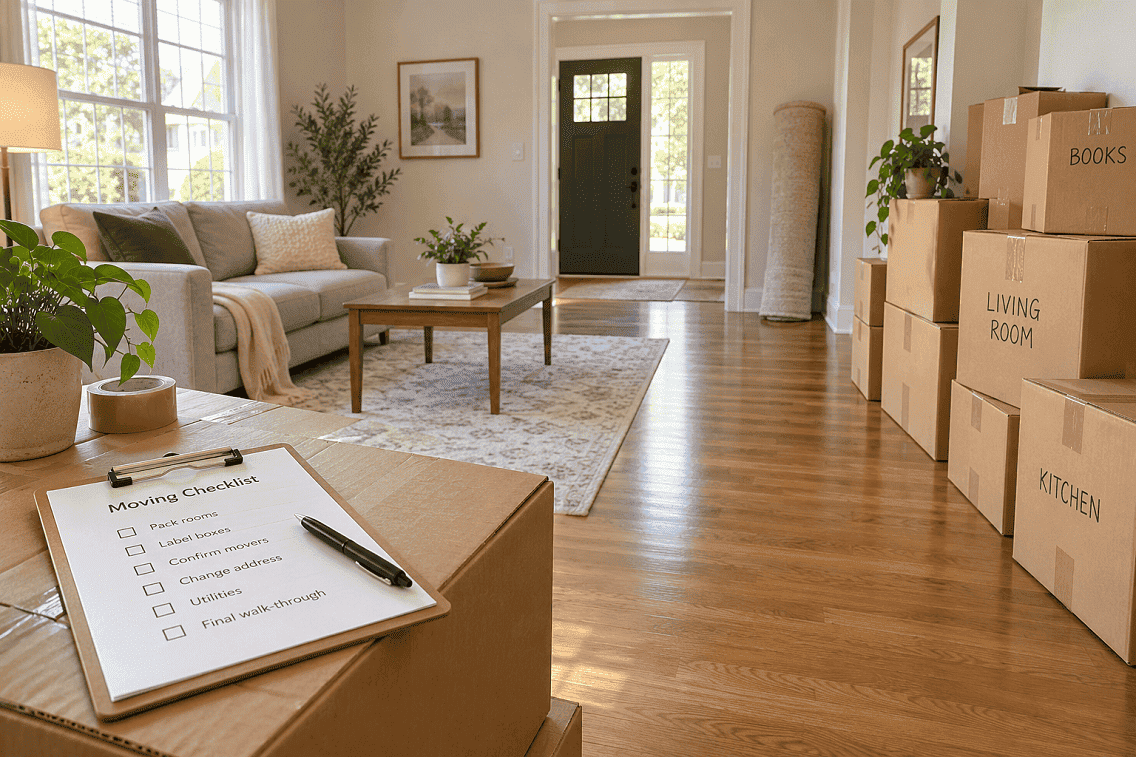

Moving day is stressful enough without scrambling to clear hallways or hunting for packing tape while your crew stands idle. The hours you spend preparing your home before the movers arrive directly affect how fast and how safely everything gets loaded.
Whether you are relocating across Pittsburgh or moving out of state, having your home ready before the crew walks through the door is one of the simplest ways to keep the entire process on schedule. This guide breaks it down task by task so nothing gets missed.
Start With a Walkthrough Two Weeks Out
Before any boxes get packed, walk through every room with a notepad. You are looking for three things – items that need special handling, furniture that requires disassembly, and anything that will not be going on the truck.
Flag large pieces like bed frames, dining tables, and shelving units. Check whether they need to be taken apart and if you have the tools. Most residential moving crews can handle disassembly on site, but knowing what is involved ahead of time keeps the timeline realistic.
Make a separate list of items you plan to transport yourself – important documents, jewelry, medications, and anything irreplaceable. These go in a personal bag and stay out of the staging area entirely.
Declutter Before You Pack
Every item you move costs time and truck space. Two weeks before your move, sort each room into four categories – keep, donate, sell, and discard.
Start with storage areas like closets, the garage, and the basement. Old paint cans, broken appliances, and clothes that no longer fit are common dead weight. For anything still in good shape, schedule a donation pickup or list items on a local marketplace a full week before the move.
The goal is straightforward – by the time the crew shows up, every item in your home should be something worth transporting.
Pack Room by Room and Label Everything
If you are handling your own packing, work through one room at a time. Jumping between rooms leads to mislabeled boxes and missing items on the other end.
Heavier items like books go in small boxes. Lighter items like linens go in large boxes. Fragile items get individually wrapped with no empty space left inside the box. Every box gets a label on the top and at least one side with the room name and a brief description of the contents.
Numbered inventory lists are even better. Write a number on each box and log the contents on a spreadsheet. When you are unpacking, you will know exactly what is in box 14 without tearing it open.
If packing feels overwhelming – especially for a large home or a tight timeline – professional packing services can handle partial or full packing so you can focus on everything else.
Prepare Large Furniture and Appliances
Movers handle the heavy lifting, but a little prep on your end prevents damage and saves time.
Strip bedding and bag it separately. If you disassemble the frame yourself, keep all hardware in a labeled zip-lock bag taped to the frame. Empty dresser drawers of anything heavy or breakable. Defrost the refrigerator 24 hours in advance and disconnect water lines from washers and dryers. For electronics, take a photo of the cable setup behind your TV before unplugging anything, then coil and label each cord individually.
Clear Pathways and Access Points
Your moving crew needs a clear path from each room to the truck. Walk the route they will take and remove anything that could slow them down.
Roll up area rugs along hallways and staircases. Move shoe racks, coat stands, and small tables away from doorways. Prop interior doors open or remove them if doorways are tight. Clear snow, ice, or debris from walkways and porch steps if you are moving during colder months. Confirm the truck can park as close to the front door as possible – if street parking is limited, check whether your municipality requires a moving truck permit.
If you live in a building with an elevator, reserve it for your move window. Competing with other residents for elevator access adds hours to the job.
Set Aside Moving Day Essentials
Pack an overnight bag or essentials box that stays with you – not on the truck. Phone chargers, toiletries, medications, a change of clothes for each family member, snacks, important documents, basic tools, and cleaning supplies for a final wipe-down.
If you have kids or pets, plan for where they will be during the load. A friend’s house, daycare, or a kennel keeps them safe and out of the crew’s path.
Communicate With Your Mover the Day Before
A quick call to your moving company the day before confirms everything is on track. Cover the arrival time, crew size, parking or access restrictions, items needing special handling, and anything that changed since the original estimate.
The more your movers know in advance, the better they can plan the truck layout and bring the right equipment.
Moving Day Morning
Do a final sweep. Walk every room, closet, and cabinet one more time – check inside the washer and dryer, behind doors, and on top shelves. Set your essentials box by the front door where it will not get loaded by mistake. Turn off lights in cleared rooms to signal they are done. Keep your phone charged and stay accessible – the crew lead will have questions throughout the day.
Get Your Home Ready – Get Your Move Right
Preparation is the single biggest factor in a smooth moving day. A home that is packed, labeled, cleared, and staged means your crew can work efficiently from the first trip to the last.
If you are planning a residential move in PA, WV, or OH, request a free quote from Central Van Lines to get started.