

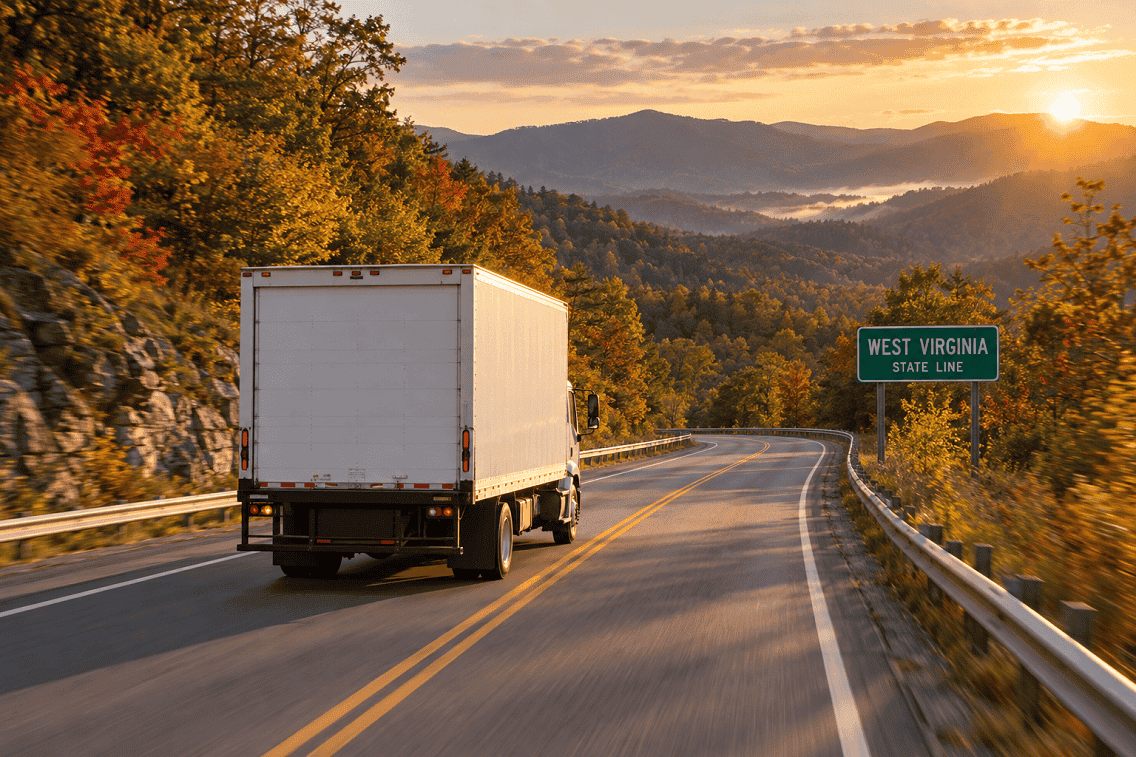
Moving Across State Lines From PA, WV, or OH - What You Need to Know

A move across town and a move across state lines are two completely different jobs. The moment your belongings cross a state border, the rules change – different licensing applies to the moving company, pricing shifts from hourly to weight-based, your timeline stretches, and there are administrative tasks on your end that a local move never triggers.
If you are planning an interstate move from Pennsylvania, West Virginia, or Ohio, this guide covers what changes, what to prepare for, and how to make sure the company handling your move is authorized to do it.
What Makes an Interstate Move Different
An interstate move means your belongings are transported from one state to another. Even a short move from Chester, WV, to East Liverpool, OH, counts because it crosses a state line.
That distinction matters because interstate moves fall under federal regulation. The Federal Motor Carrier Safety Administration (FMCSA) oversees companies that transport household goods across state borders. A company operating interstate must hold a USDOT number and be registered with the FMCSA as an interstate household goods mover. A company that only holds a state-level license cannot legally move your belongings across a state line.
How Interstate Moving Is Priced
Local moves are typically priced by the hour. Interstate movers work differently, using one of two models.
Weight-based pricing means your shipment is weighed at a certified scale before and after loading. The rate per pound is multiplied by the distance, plus fees for packing, stairs, long carry, elevator access, and any additional services.
Cubic-foot pricing is based on how much truck space your shipment occupies. This model is common with consolidated shipments where your goods ride alongside other customers’ loads.
In both cases, you should receive a written estimate before the move. Federal law requires interstate movers to offer either a binding or non-binding estimate – something Central Van Lines’ blog on binding vs non-binding estimates breaks down in detail.
Timelines to Expect
Plan for a wider delivery window than a local move.
Moves under 500 miles (PA to OH, WV to PA, WV to OH) typically take 2-5 business days. Moves between 500 and 1,000 miles run 4-7 business days. Anything over 1,000 miles can take 7-14 business days. Peak season – May through September – pushes timelines toward the longer end.
Lock in your pickup date early. Four to six weeks of lead time is standard for long-distance moves. Less than two weeks limits your options and may increase cost.
Choosing an Interstate Mover
Not every moving company is authorized to cross state lines. Verify these before signing anything.
Check the USDOT number at the FMCSA’s SAFER system. Confirm the company’s MC number shows “Authorized” status for household goods. Verify that insurance is on file and current. Ask for the estimate in writing – federal regulations require it. And review the company’s complaint history through the FMCSA – a pattern of complaints about hostage loads, damaged goods, or bait-and-switch pricing is a red flag.
Central Van Lines holds active USDOT and MC authority and has been handling interstate moves across the tri-state region since 1997.
Administrative Tasks When Changing States
Moving to a new state triggers updates that a local move does not. Start these as soon as your move date is confirmed.
Most states require a new driver’s license and vehicle registration within 30-60 days. Pennsylvania, West Virginia, and Ohio each have different timelines and fees – check your destination state’s DMV. Register to vote in your new state. If you move mid-year, you may need to file partial-year tax returns in both states (PA uses a flat rate while WV and OH use graduated brackets). Transfer school records if you have children. Schedule utility disconnections and connections. File a USPS change of address at least two weeks out. Contact your auto insurer – rates change by state and ZIP code.
Moving Between PA, WV, and OH
The tri-state corridor is one of the most common interstate routes in the region. Moves between Pittsburgh and Charleston, WV, Pittsburgh and Columbus, or Morgantown and Cleveland happen weekly.
A few things specific to this area – mountain terrain in WV means some roads cannot accommodate full-size moving vans, so your mover may need a shuttle truck for rural origins or destinations. Toll roads (PA Turnpike, WV Turnpike, OH Turnpike) factor into transportation cost but are usually included in the line-haul rate. And winter weather between November and March can delay pickups and deliveries, so build buffer days into your plan.
Plan Your Interstate Move the Right Way
An interstate move has more moving parts than a local one – literally and legally. Start early, verify your mover’s credentials, understand your estimate, and stay on top of the administrative checklist.
Central Van Lines is a licensed interstate household goods mover serving PA, WV, and OH. Request a free quote and we will walk you through every step.