

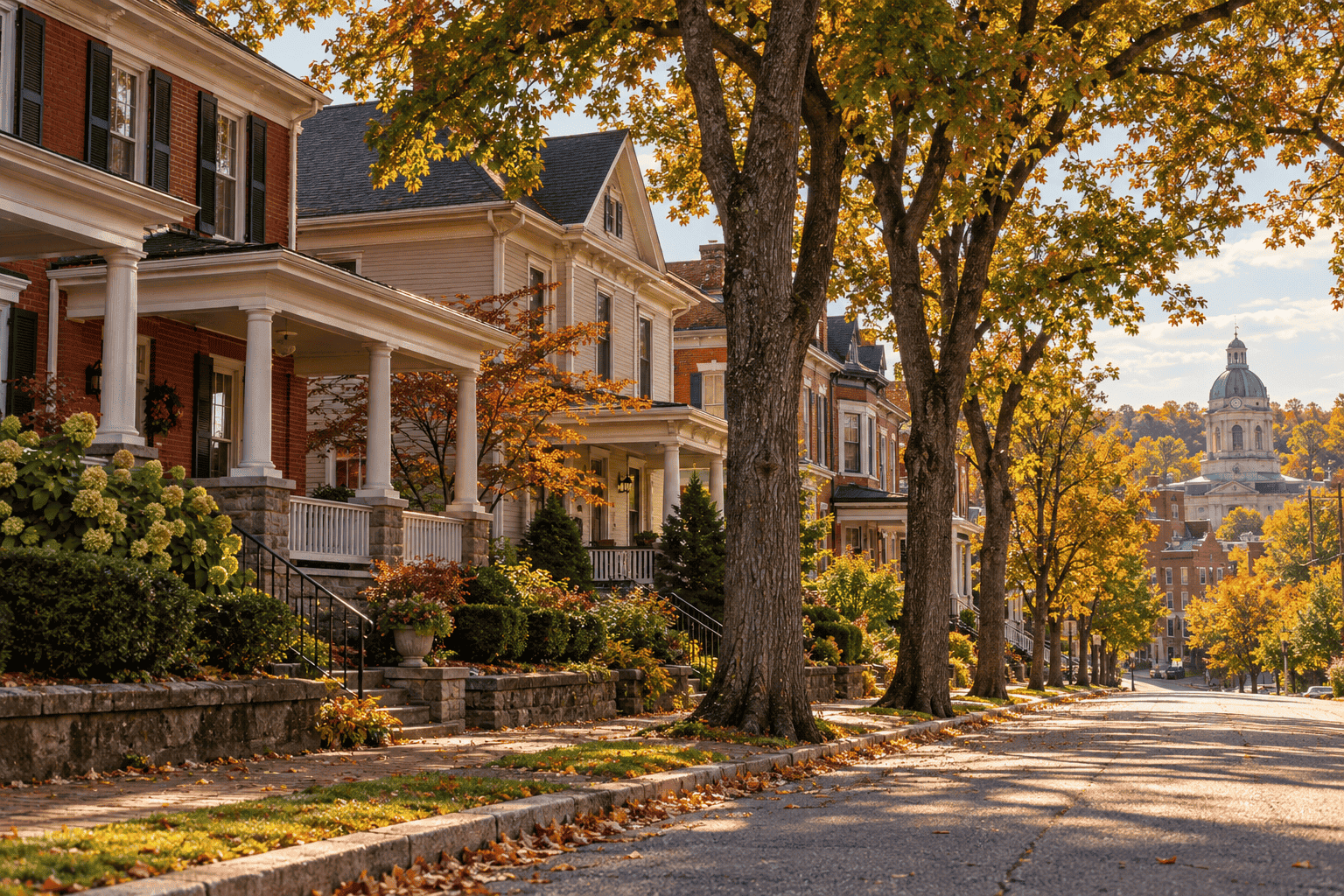

Greensburg is the county seat of Westmoreland County and sits about 30 miles southeast of downtown Pittsburgh along the Route 30 corridor. It is a mix of historic downtown blocks, established residential neighborhoods, and newer suburban development stretching toward the surrounding townships. The area draws people relocating from Pittsburgh for more space, lower housing costs, and access to the Laurel Highlands – and it draws people moving into the Pittsburgh metro who want to stay close without being in the city itself.
If you are moving into, out of, or within Greensburg, here is what the area means for your move.
The Housing Mix
Greensburg’s housing stock ranges from pre-war row homes and colonials in the walkable downtown core to split-levels and ranch homes in the surrounding neighborhoods, plus newer construction in developments toward Hempfield and Unity Township.
Older homes in the borough – particularly along Pittsburgh Street, South Main, and the neighborhoods radiating from the courthouse square – tend to have narrow doorways, steep staircases, and limited parking. Movers working these blocks often need to stage on the street and plan around tight interior paths.
Suburban properties in the surrounding townships are generally easier to access but come with longer driveways, multi-car garages full of storage, and basements that add to the inventory. Let your moving company in Greensburg know the specifics of your property during the estimate – access and layout drive the timeline more than square footage alone.
Getting Around on Moving Day
Route 30 is the main east-west corridor through Greensburg, and it carries heavy traffic during commute hours and on weekends near the shopping centers. If your move involves crossing Route 30 or staging near it, schedule the truck arrival for early morning to avoid delays.
Route 119 runs north-south through town and connects to the turnpike interchange at New Stanton. If your move is coming from or going to Pittsburgh, the PA Turnpike (I-76) to Route 30 exit is the most common truck route. Confirm with your mover which route they plan to take – some residential streets off Route 30 have weight limits or low clearances that full-size vans need to avoid.
Parking in downtown Greensburg is metered and limited. If your origin or destination is in the borough core, check whether you need a temporary parking permit for the moving truck. The borough office can issue one with a few days’ notice.
Seasonal Considerations
Greensburg follows the western Pennsylvania weather pattern – warm, humid summers and cold winters with regular snowfall from November through March. The area sits at a slightly higher elevation than Pittsburgh, which means it often picks up more snow than neighborhoods closer to the rivers.
Summer is peak moving season and the easiest window for logistics. Fall is the sweet spot – comfortable temps, lighter booking schedules, and fewer weather disruptions. Winter moves work but require cleared driveways, salted walkways, and a crew prepared for cold-weather conditions. If you are moving during a snowfall, confirm your mover’s policy on weather delays.
Rain is common year-round. Make sure your mover uses floor runners and waterproof wrapping for furniture if rain is in the forecast.
What to Expect on Costs
Local moves within Westmoreland County are priced hourly – crew size times hours worked, plus travel time and materials. A two-bedroom apartment in the borough typically takes four to six hours. A four-bedroom home in Hempfield or Unity with a full basement and garage can take eight to twelve.
Accessorial charges to watch for include stair carries in older borough homes, long carries if the truck cannot park close to the door, and packing materials if you use the mover’s packing service. These add up faster in downtown Greensburg properties than in suburban ones.
For moves between Greensburg and Pittsburgh – about 30 miles – most companies price it as a local move rather than long-distance, but confirm during the estimate. The definition varies by carrier.
A residential moving estimate should be based on an in-home or virtual walkthrough, not a phone call. The access challenges in older Greensburg homes cannot be accurately quoted sight unseen.
Greensburg to Pittsburgh and Beyond
Many Greensburg moves connect to the broader [Westmoreland County](\1/\2 and Pittsburgh corridor. Common routes include moves between Greensburg and Murrysville, Irwin, Latrobe, and Ligonier in the county, as well as moves into Pittsburgh neighborhoods like Squirrel Hill, Shadyside, and the South Hills.
If your move crosses into another county or covers more than 30 miles, ask how the mover prices the transition between local and long-distance rates. Some companies switch to a flat-rate model once the distance exceeds their local threshold.
Plan Around the Area
Greensburg is a well-connected, affordable market with character – and its mix of older borough homes and newer suburban development means moving logistics vary block by block. Know your property’s access situation, communicate it during the estimate, and hire a crew that works this area regularly.
Central Van Lines serves Greensburg and all of Westmoreland County. Request a free quote and we will match the crew and equipment to your property.