

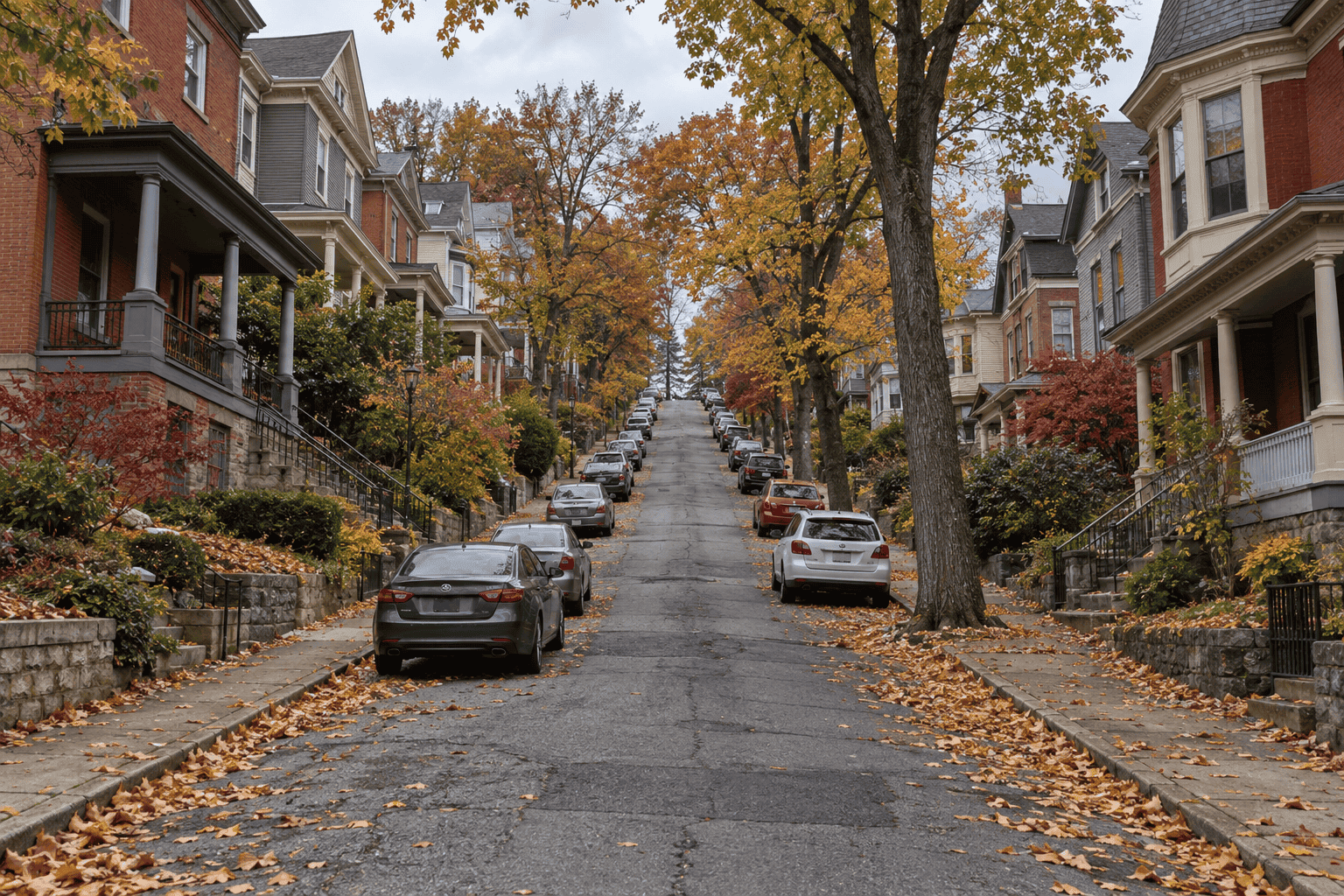

Wheeling sits in the Northern Panhandle of West Virginia, wedged between the Ohio River and the ridgelines that define the Upper Ohio Valley. It is a small city with big-move challenges – steep residential streets, older homes with narrow stairwells, seasonal weather swings, and a housing stock that ranges from Victorian-era hillside properties to modern developments along the river corridor.
If you are moving into, out of, or within Wheeling, the logistics depend on where in town you are headed and what time of year the truck shows up.
The Terrain Factor
Wheeling is built on hills. Neighborhoods like Woodsdale, Pleasant Valley, and Elm Grove climb steeply from the valley floor, and many residential streets are narrow, winding, and lined with parked cars. That creates challenges for moving trucks – full-size vans may not fit on certain streets, and a shuttle truck (a smaller vehicle that transfers your belongings to and from the main van) may be necessary.
If you are moving to or from a hillside property, let your moving company know during the estimate. They need to assess the street width, grade, and parking situation before committing a truck size. A crew that shows up with a 53-foot trailer on a street that cannot accommodate it loses hours solving a problem that should have been identified in advance.
Properties in the downtown historic district and along National Road present similar access issues – tight lots, limited staging areas, and sometimes no dedicated parking for a moving truck. Street permits may be required in certain areas.
Older Homes and What They Mean for Your Move
A significant portion of Wheeling’s housing stock was built before 1950. These homes have character – and they have narrow doorways, steep interior staircases, tight landings, and basements accessible only through exterior bulkhead doors.
This matters because large furniture pieces – king mattresses, sectional sofas, armoires, and dining tables – may not fit through standard pathways without disassembly, angling, or in some cases, removal through a window. Professional movers who work in this area regularly know the tricks. A crew unfamiliar with older WV homes is more likely to damage a door frame, scratch a wall, or get stuck on a landing.
Point out any tight spots during the pre-move walkthrough so the crew can plan equipment and approach accordingly.
Seasonal Considerations
Wheeling’s weather follows the Upper Ohio Valley pattern – hot, humid summers and cold, snowy winters with freeze-thaw cycles that make road and sidewalk conditions unpredictable from November through March.
Summer moves are the most popular and the easiest logistically, but book early – availability tightens between May and August across the entire region. Fall is the sweet spot for scheduling flexibility and comfortable working conditions.
Winter moves are doable but require preparation. Icy driveways, frozen steps, and snow-covered walkways slow down the load and create safety risks. If you are moving in winter, clear and salt all pathways the morning of the move, and confirm with your mover that the crew has the equipment to work safely in winter conditions.
Rain is frequent year-round. Your moving company should use floor runners to protect interior flooring and wrap furniture in waterproof materials if rain is in the forecast.
What to Expect on Costs
Moving costs in Wheeling are generally lower than in larger metros like Pittsburgh or Columbus, but the terrain and housing stock can add accessorial charges that bump up the final number.
For a local move within Ohio County, expect hourly rates for a two- or three-person crew plus the truck. A standard two-bedroom apartment move takes four to six hours. A larger home on a hillside with a stair carry can take eight or more.
Additional charges to watch for include stair carries (per flight), long carries (when the truck cannot park within a standard distance of the door), shuttle service (if a full-size truck cannot access your street), and packing materials if you use the mover’s packing service.
Get a written estimate that accounts for these variables before committing. A residential moving estimate based on a phone call alone cannot capture the access challenges that Wheeling properties frequently present.
Cross-River Moves
Wheeling’s position on the Ohio border means short-distance moves across the river into Bridgeport, St. Clairsville, Martins Ferry, or Belmont County, OH, are common. These are technically interstate moves – they cross a state line – which means the moving company must hold federal USDOT authority, not just a WV state license.
If you are moving between Wheeling and Eastern Ohio, verify that your mover is licensed for interstate transport. The distance may be five miles, but the regulatory requirements are the same as a move across the country.
Choosing a Mover in Wheeling
When evaluating movers for a Wheeling move, prioritize experience in the area over price alone. A company that regularly works in Wheeling and the Upper Ohio Valley knows which streets can handle a full-size van, which neighborhoods require shuttles, and how to navigate the older homes that make up much of the local housing stock.
Ask how many moves the company does in Ohio County per month. Ask whether they own shuttle trucks or would need to rent one. Ask for references from customers in your neighborhood or a similar one. And get the estimate in writing with all accessorial charges itemized.
Plan Around the Place
Wheeling is a great town with real character – and it comes with moving logistics that reward planning. Know your property’s access challenges, communicate them early, and hire a crew that has worked these streets before.
Central Van Lines serves Wheeling and the entire Northern Panhandle. Request a free quote and we will send a crew that knows the terrain.