

Office Decommissioning - What It Covers and When You Need It

You are vacating an office. The new space is ready or the lease is ending and you are not renewing. Either way, the old space needs to be emptied – and not just moved out of. Furniture that is not coming with you, IT equipment being retired, filing cabinets full of documents that need secure disposal, and fixtures that were installed during your tenancy all have to go somewhere.
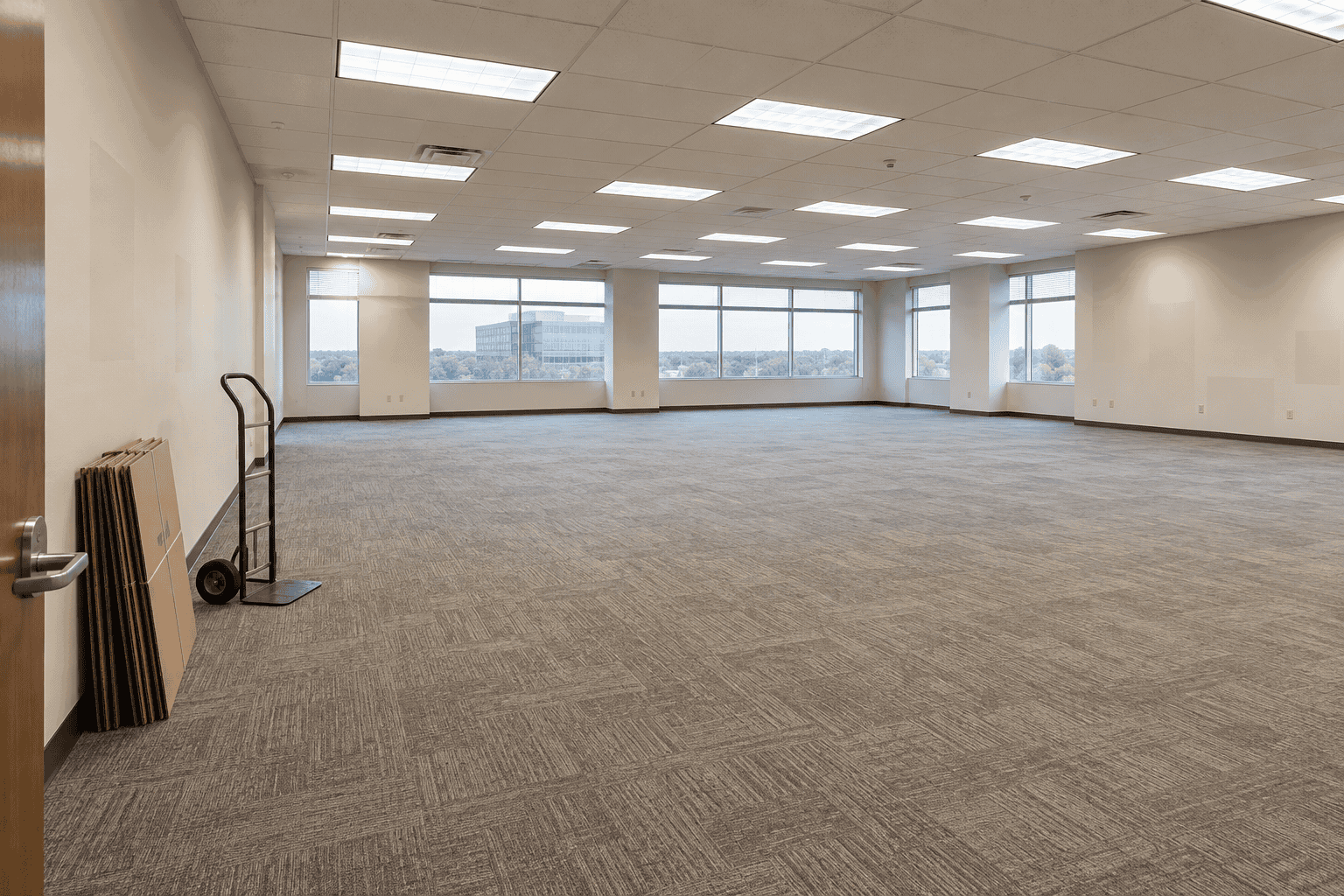
That is what office decommissioning covers. It is the process of clearing, cleaning, and restoring a commercial space after a business moves out. And it is more involved than most companies expect until they are staring at a 10,000-square-foot floor full of cubicles, chairs, and cable runs they no longer need.
What Office Decommissioning Actually Includes
Office decommissioning is a full-scope removal and restoration service. Depending on the space and the lease terms, it can include any or all of the following.
- Furniture removal and disposal. Desks, chairs, cubicle systems, conference tables, reception furniture, break room equipment – everything that is not moving to the new location gets removed. Items in good condition can be donated, resold through liquidation, or recycled. Everything else goes to responsible disposal.
- IT and electronics removal. Servers, workstations, monitors, printers, phone systems, cabling, and networking equipment all need to be disconnected and removed. Hard drives and storage media containing sensitive data require certified destruction or secure wiping.
- Fixture removal. Depending on your lease, you may be required to remove fixtures your company installed – custom shelving, signage, security systems, built-in cabinetry, or specialized lighting. This is typically spelled out in the lease’s restoration clause.
- Document destruction. Filing cabinets full of old records, HR files, financial documents, and client data cannot just be thrown into a dumpster. Secure document shredding, either on site or through a certified destruction vendor, is a standard part of decommissioning.
- Cleaning and restoration. Once everything is out, the space needs to be cleaned and repaired to the condition specified in your lease. That may include patching walls, removing cable channels, touching up paint, and deep cleaning floors and restrooms.
Why Companies Need This Service
Most businesses do not have the time, staff, or equipment to handle decommissioning internally. Your team is focused on setting up the new space, keeping operations running during the transition, and managing the business. Asking employees to spend a week dismantling cubicles and hauling furniture to a dumpster is not a productive use of their time.
There is also a liability issue. Lease agreements almost always include a restoration clause – a requirement to return the space to a specified condition by a hard deadline. Miss that deadline and you are paying holdover rent, potentially at a penalty rate. Fail to meet the condition requirements and you lose part or all of your security deposit.
A decommissioning crew handles the entire scope on your timeline, delivers the space lease-ready, and documents the condition at handoff so there is no dispute with the landlord.
When to Start Planning
Decommissioning should be part of your move plan from the beginning – not an afterthought in the final week of your lease.
Start the conversation at least 60 days before your lease end date. That gives time to inventory everything in the space, decide what is moving, what is being donated or liquidated, and what is being disposed of. It also gives time to schedule the work around your move – ideally, the decommissioning crew comes in the day after your movers load out the last truck.
For larger spaces – multi-floor offices, call centers, or facilities with specialized infrastructure – start 90 days out. These jobs require phased scheduling, dumpster permits, and coordination with building management.
What Happens to the Furniture and Equipment
Not everything goes to a landfill. A good decommissioning partner will sort and route items based on condition and value.
Items in good condition can be sold through office furniture liquidation channels. Proceeds may offset the cost of the decommissioning project. Items in usable but not resalable condition can be donated to nonprofits, schools, or community organizations – and the donation receipts can provide a tax benefit. Items that cannot be reused go to recycling (metals, electronics, certain plastics) or responsible disposal.
If you need items stored temporarily rather than disposed of – seasonal inventory, archived records, or equipment being redeployed later – warehousing services can hold them in a secure, climate-controlled facility until you are ready.
How to Evaluate a Decommissioning Provider
Ask the same questions you would ask any commercial vendor handling a high-stakes deadline.
How many decommissioning projects have they completed in the past year? Look for a company that does this regularly, not a moving company that occasionally clears a space as a favor to a client.
Can they handle the full scope in-house? You do not want to coordinate three separate vendors for furniture removal, document destruction, and cleaning. A full-service provider manages all of it under one contract.
What is their timeline for a space your size? A 5,000-square-foot office is a one- or two-day job. A 50,000-square-foot multi-floor space may take a week or more. Make sure the timeline aligns with your lease deadline.
Do they provide documentation? Before-and-after photos, disposal manifests, donation receipts, and a certificate of data destruction protect you if the landlord disputes the space condition or if an auditor asks where old records went.
Central Van Lines provides commercial moving and office services across PA, WV, and OH, including full-scope decommissioning for businesses vacating or downsizing their space.
Leave the Space Right
Office decommissioning is the last step of your move – and one of the most consequential. A space returned on time and in the right condition protects your deposit, ends your lease cleanly, and keeps you from paying a single extra day of rent.
Request a free quote from Central Van Lines and we will scope the decommissioning alongside your move.