

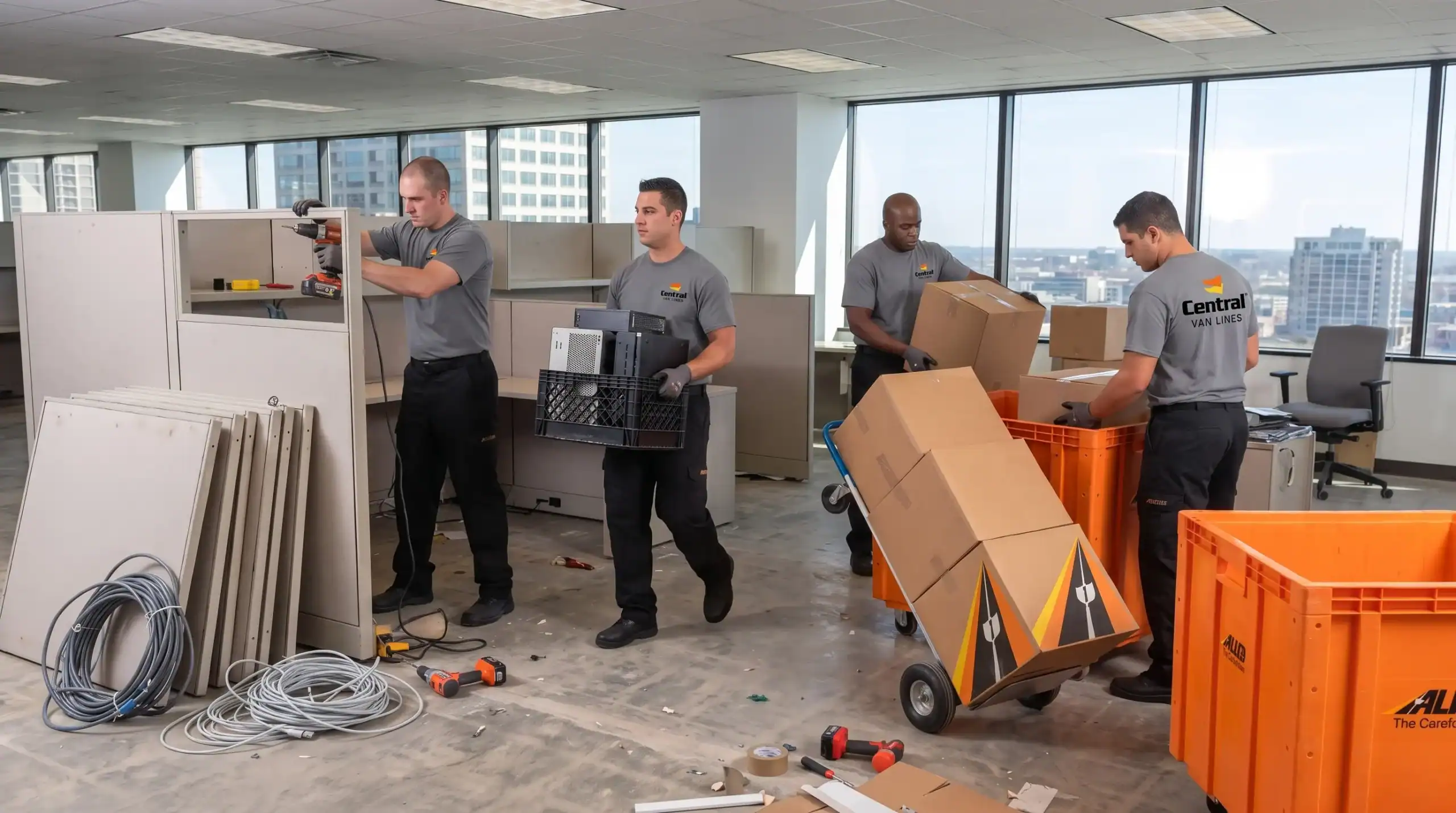
Pittsburgh Office Move-Out Guide - How to Leave Your Space on Time and in Shape

Most office moves are planned from the destination backward: where the desks go, when the internet goes live, which day the team starts in the new space. The move-out side gets less attention, and it is usually where the surprises happen. Your lease has an end date, your landlord has expectations about the condition of the space, and everything you do not plan to take still has to leave the building somehow.
Whether your company is relocating across Pittsburgh, consolidating into a smaller footprint, or closing an office entirely, this guide covers what it takes to move out cleanly, on schedule, and without leaving money on the table.
Start With Your Lease, Not Your Floor Plan
Before you book movers or order boxes, pull your lease and read the surrender and restoration clauses. They tell you what “move-out” actually means for your space, and they vary more than most tenants expect.
Look for these items:
- The surrender date and whether you have any holdover protection if the move slips by a few days.
- Restoration requirements, such as removing cabling, patching walls, taking down signage, or returning the space to its original layout.
- What stays and what goes. Some leases require you to leave built-in items. Others require you to remove everything you installed, including server racks and furniture systems.
- The final walkthrough process and what triggers the release of your security deposit.
Restoration work often needs contractors who book weeks in advance, so knowing the scope early keeps it from becoming a last-minute cost.
Build a Move-Out Timeline That Works Backward
For a typical Pittsburgh office, plan the move-out over eight to twelve weeks. Larger offices, multi-floor tenants, and companies with labs or data rooms need more time.
A workable sequence looks like this:
- 10 to 12 weeks out: Review the lease, confirm the surrender date, and notify the landlord or property manager of your move-out plans.
- 8 weeks out: Inventory furniture, equipment, and records. Decide what moves, what is sold or donated, and what is recycled.
- 6 weeks out: Book your commercial movers and any restoration contractors. Reserve freight elevators and loading dock time with building management.
- 4 weeks out: Schedule IT disconnection and plan data backups. Begin packing archives and low-use items.
- 1 to 2 weeks out: Pack active workstations, label everything by destination, and confirm the move-day schedule with the building.
- After the move: Remove remaining items, complete restoration, and schedule the final walkthrough.
Decide What Moves and What Does Not
An office move-out is the best chance you will get to cut what you no longer need. Moving furniture that does not fit the new floor plan, or equipment no one uses, costs money twice: once to move it and again to get rid of it later.
Sort everything into four groups:
- Moves to the new office. Furniture and equipment that fits the new layout and is still in good condition.
- Goes to storage. Items you need later but not on day one, such as seasonal equipment, overflow furniture, or inactive records. Short-term storage gives you room to phase the move instead of cramming everything in at once.
- Resold or donated. Usable furniture and equipment that has value to someone else.
- Recycled or disposed of. Broken furniture, obsolete electronics, and anything that cannot be reused.
For the last two groups, office decommissioning and disposal services can handle removal, recycling, and donation coordination so your team is not stuck hauling chairs to the curb.
Plan Around Your Building’s Rules
Pittsburgh office buildings, especially Downtown towers and larger suburban office parks, set strict rules for move-outs. Most require advance scheduling of freight elevators and loading docks, a certificate of insurance from your moving company, and floor and wall protection along the move path. Many also restrict moves to evenings or weekends.
Get the building’s move-out requirements in writing early and share them with your mover. Our guide to what Pittsburgh building managers require before a commercial move covers the paperwork in more detail.
Handle IT, Data, and Records Carefully
Technology is usually the most sensitive part of an office move-out. Before anything is unplugged, back up critical data and confirm your IT team or provider has a disconnection and reconnection plan.
Pay particular attention to:
- Servers and network equipment. These need careful packing and a planned shutdown. For larger setups, a data center moving team can manage the relocation.
- Hard drives in retired equipment. Computers, copiers, and phones being disposed of should have their drives wiped or destroyed before they leave your control.
- Paper records. Decide which files move, which go to secure storage, and which are past their retention period and can be shredded.
Keeping a simple inventory of every device and where it went makes the next audit or insurance claim far easier.
Leave the Space Ready for the Walkthrough
Once the movers are gone, the job is not finished. Walk the space with your lease in hand and check it against the restoration requirements. Remove any remaining items, take down signage, and make sure keys, access cards, and parking passes are collected and returned.
Take date-stamped photos of every room after the space is cleared. If there is any dispute about the condition of the space or your security deposit, those photos are your record.
FAQs – Office Move-Outs in Pittsburgh
How far in advance should we plan an office move-out?
Eight to twelve weeks is a practical window for most Pittsburgh offices. Larger offices, multi-floor tenants, and companies with specialized equipment should start earlier, especially if the lease requires restoration work.
What happens to furniture we do not want to keep?
Usable furniture can often be resold or donated. The rest can be recycled or disposed of. A decommissioning service can coordinate all of it so the space is cleared by your surrender date.
Can we move out over a weekend to avoid downtime?
Often, yes. Many Pittsburgh office buildings prefer or require after-hours and weekend moves, which also helps keep your business running during the transition. Book early, because weekend slots fill quickly.
Do we need to remove cabling and wiring?
It depends on your lease. Some landlords require tenants to remove all low-voltage cabling they installed, while others want it left in place. Check the restoration clause before you schedule contractors.
What if our new office is not ready on our move-out date?
Short-term storage can bridge the gap. Your furniture and equipment move out on schedule and are delivered to the new space once it is ready.
Plan Your Pittsburgh Office Move-Out
A clean office move-out comes down to reading the lease early, sorting what you own before moving it, respecting the building’s rules, and leaving the space ready for inspection. Central Van Lines has handled commercial moves across Pittsburgh and the surrounding region since 1997, from single-floor offices to multi-site relocations. Request a free quote and we will help you plan a move-out that finishes on time.